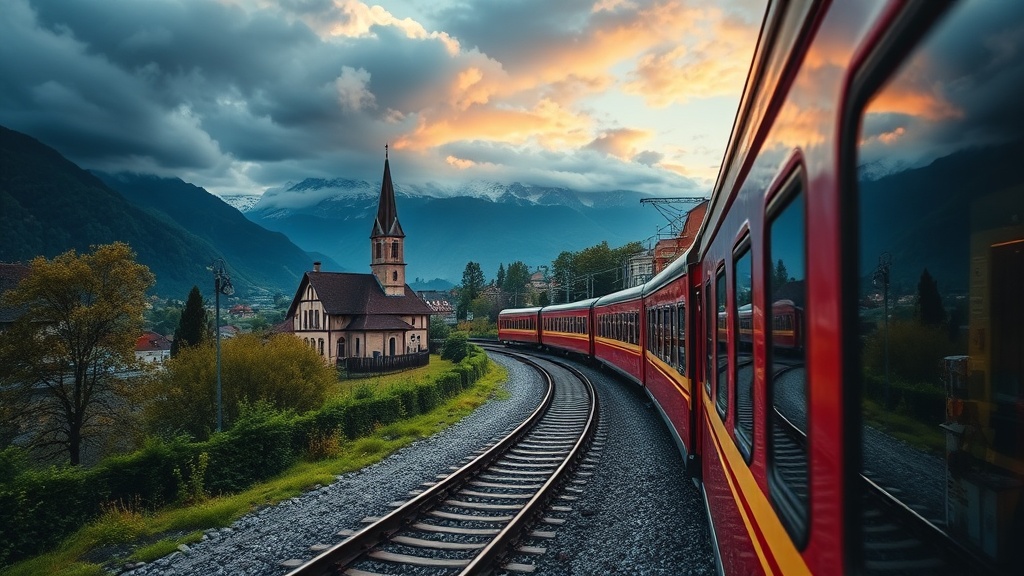
Choosing the Right Train Route for Scenic European Journeys

Over 80% of travelers in Europe use rail for long-distance travel, and for good reason—it's often faster and more relaxing than flying between major hubs. This guide breaks down how to pick a rail route that prioritizes views over speed, how to budget for different classes of service, and how to identify the most scenic lines across the continent. Choosing the right path determines if you're staring at a concrete tunnel or a mountain pass.
How Do I Choose Between High-Speed and Scenic Routes?
You should choose a high-speed route for efficiency between major cities and a scenic route if the goal is the view itself. High-speed trains, like the Eurostar or the TGV in France, prioritize getting you from point A to point B as fast as possible. These often run through tunnels or along much flatter terrain. If you want to see the Alps or the rugged coastlines of Norway, you'll need to look for regional or specialized tourist lines.
High-speed rail is a marvel of engineering, but it isn't always pretty. You'll spend more time in tunnels and less time looking out the window. If you're traveling from Paris to Lyon, you'll arrive in two hours, but you won't see much of the countryside. On the other hand, a route like the Bernina Express in Switzerland is designed specifically for the sightlines. It moves slower, but every turn is a photo opportunity.
It's a trade-off between time and experience. If you're on a tight schedule, stick to the fast lines. If you have a full day to kill, take the slower, winding paths. Most travelers find that a mix of both works best—fast trains to get to a region, then local lines to explore it.
Types of Rail Experiences
- High-Speed Rail (HSR): Fast, efficient, and mostly straight lines. Great for moving between countries.
- Regional/Local Trains: Slower, frequent stops, and often much more scenic.
- Luxury/Tourist Trains: Highly expensive, specialized routes like the Venice Simplon-Orient-Express.
- Mountain Railways: Specialized narrow-gauge trains designed for steep inclines and high altitudes.
What Is the Best Time to Book Scenic Train Tickets?
The best time to book scenic train tickets is three to four months in advance to secure the lowest prices and the best seat availability. While standard regional tickets often have fixed prices, specialized routes like the Glacier Express or high-demand routes through the Alps sell out quickly. If you wait until the week of your trip, you might find the "scenic" carriages are already fully booked.
Prices fluctuate based on demand and the type of train. For example, booking a seat on a Deutsche Bahn long-distance train early can save you a significant amount of money compared to buying it at the station. If you're planning a trip through the Swiss Alps, check the SBB official website for schedules and booking windows. They are the gold standard for reliability and planning.
Don't forget about seasonality. A route that looks spectacular in the winter with snow-capped peaks might feel completely different in the summer with lush green valleys. I personally find the shoulder seasons—spring and autumn—to be the sweet spot for both weather and price. The crowds are thinner, and the light is often better for photography.
| Route Type | Typical Cost | Primary Benefit | Best For |
|---|---|---|---|
| High-Speed (TGV/ICE) | Moderate to High | Speed/Efficiency | Business/Tight Schedules |
| Regional (TER/Regional) | Low | Flexibility | Day Trips |
| Luxury (Orient Express) | Very High | Luxury/History | Special Occasions |
| Scenic/Mountain | Moderate to High | Views/Experience | Vacation/Leisure |
Which Side of the Train Should I Sit On?
The best side of the train depends entirely on the direction of travel and the specific geography of the route. For most scenic journeys, the direction of the sun matters just as much as the geography. If you're traveling north to south, the western side of the train will catch more sunlight, which can either brighten your photos or cause a glare on the glass.
Here is a quick rule of thumb for popular routes:
- In the Alps (Switzerland/Austria): Try to sit on the side of the track that faces the mountains rather than the valley floor.
- Coastal Routes (Amalfi Coast/Norway): Sit on the side facing the water. In Norway, the sea views are the main event.
- River Routes (Rhine/Danube): Sit on the side facing the river. The castles are much more impressive when they aren't behind you.
If you're unsure, check a map of the route before you board. Most major rail websites, like Rail Europe, provide detailed route maps. If the route bends around a lake, look at the map to see which side the water falls on. It's a small detail, but it makes a huge difference when you're staring at a wall of trees versus a sparkling blue lake.
One thing to watch out for: the sun. There's nothing worse than being stuck in a beautiful seat but being unable to see anything because the glare is hitting your window. If you're traveling in the afternoon, the eastern side might be easier on the eyes. It's a minor detail, but it's worth the five minutes of research.
How Much Does a Rail Pass Cost?
A rail pass typically costs anywhere from $300 to over $1,000 depending on the duration and the number of countries included. The Eurail Pass is the most common option for non-European residents, and it offers significant value if you're planning to move frequently between different regions. However, for a single, specific scenic route, a point-to-point ticket is almost always cheaper.
A rail pass is an investment in flexibility. If you want to wake up and decide on a whim to head to a different city, the pass is your best friend. But if you have a set itinerary—say, London to Paris to Amsterdam—buying individual tickets in advance will save you a lot of money. The price of a pass is high because it's not just a ticket; it's a subscription to the entire network.
Worth noting: many high-speed or premium scenic trains require a mandatory seat reservation fee on top of the pass price. This means even if you have a "free" ride with your pass, you might still have to pay $10 or $20 to actually sit down. Always check the fine print for the specific train you want to ride. Some mountain-climbing trains don't even accept standard passes and require a separate ticket.
If you're planning to do a lot of walking or hiking near your stops, you might want to ensure your gear is ready. I previously wrote about how to pack a lightweight water filter for more rugged excursions, which can be helpful if your train journey takes you into more remote, mountainous areas.
The reality is that there's no single "correct" way to travel by rail. If you want to see the world through a window, prioritize the slow, regional lines. If you want to see the world through a high-speed pane of glass, stick to the major corridors. Just make sure you know which one you're choosing before you head to the station.